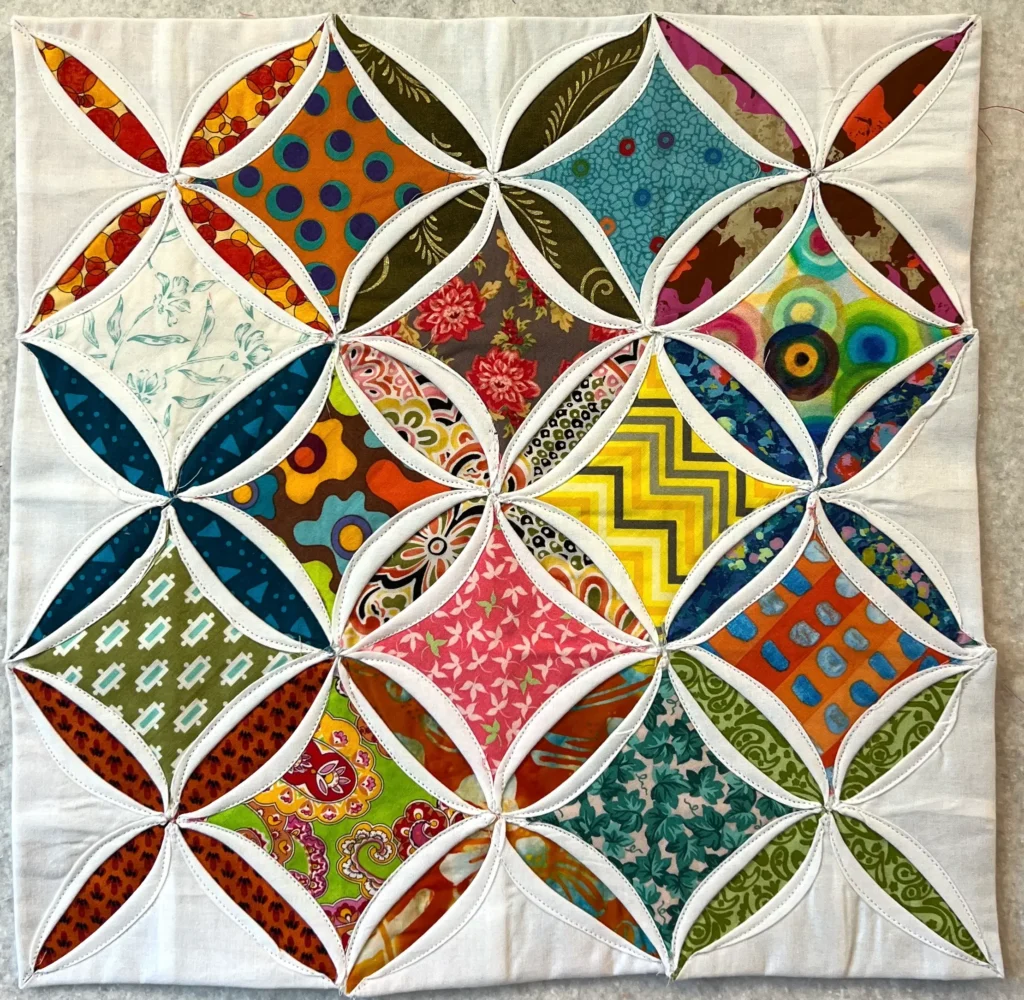
Cathedral Window – Quilt Pattern is one of the most iconic and visually striking designs in the world of quilting. This traditional pattern is instantly recognizable for its folded fabric technique that creates a stunning stained-glass effect, reminiscent of cathedral windows. In this article, you will discover the history, techniques, materials, and creative possibilities behind this timeless quilt design, explained in a clear, humanized, and SEO-optimized way.
The Cathedral Window – Quilt Pattern is unique because it relies more on fabric folding than on traditional piecing. Instead of sewing many small pieces together, quilters manipulate squares of fabric to form curved frames that hold colorful inserts. This method gives the quilt a sculptural quality that stands out among other patterns.
Throughout this comprehensive guide, the Cathedral Window – Quilt Pattern will be discussed in depth, covering its origins, construction process, fabric choices, and modern adaptations. The goal is to help you fully understand this pattern, whether you are a beginner exploring classic techniques or an experienced quilter seeking inspiration for your next project.
History and Meaning of the Cathedral Window – Quilt Pattern
The Cathedral Window – Quilt Pattern has deep roots in quilting history and is often associated with early American and European textile traditions. Its name comes from the resemblance of the finished quilt to stained-glass windows found in historic cathedrals.
Originally, this pattern was popular because it could be made entirely by hand, without the need for batting or backing in its earliest forms. This made it practical during times when resources were limited.
The folded fabric technique used in the Cathedral Window – Quilt Pattern reflects a tradition of frugality and creativity. Quilters often used solid-colored muslin for the background and small scraps of colorful fabric for the “window panes.”
Over time, the pattern became a symbol of patience and craftsmanship. Completing a Cathedral Window quilt required dedication, as each fold and stitch needed to be precise.
Today, the Cathedral Window – Quilt Pattern is celebrated not only for its beauty but also for its historical significance within the quilting community.
Understanding this background adds emotional value to the quilt, transforming it from a decorative object into a piece of living history.
Fabric Choices and Color Planning
Selecting the right fabrics is essential when creating a Cathedral Window – Quilt Pattern. Because the design relies heavily on contrast, fabric choice directly impacts the final visual effect.
Traditionally, quilters used a solid, light-colored fabric for the background. This neutral base helps define the curved “window frames” and keeps the overall design balanced.
The inset fabrics, often referred to as the “windows,” are where creativity shines. Bright colors, floral prints, or bold patterns bring life and personality to the Cathedral Window – Quilt Pattern.
Cotton fabric is the most common choice due to its durability and ease of folding. A medium-weight cotton works best, as it holds creases well without becoming too bulky.
Color planning is crucial. High contrast between the background and window fabrics enhances the stained-glass illusion that defines the Cathedral Window – Quilt Pattern.
Careful fabric selection ensures that the quilt remains visually cohesive while allowing each window to stand out as a unique design element.
Construction Techniques and Folding Methods
The construction of the Cathedral Window – Quilt Pattern is fundamentally different from traditional patchwork quilts. Instead of sewing pieces edge to edge, this pattern uses folded fabric to create structure.
The process typically begins with large squares of background fabric. These squares are folded and stitched in a way that forms the curved frames characteristic of the design.
Precision is essential. Accurate folding ensures symmetry and helps the quilt lay flat. Inconsistent folds can disrupt the clean lines of the Cathedral Window – Quilt Pattern.
Many quilters prefer hand stitching for this pattern, as it allows greater control over the folds. However, some modern adaptations incorporate machine stitching to speed up the process.
Pressing plays a significant role. Sharp creases help define the curved edges and maintain the quilt’s architectural appearance.
Although time-consuming, the construction process is meditative and rewarding, making the Cathedral Window – Quilt Pattern a favorite for quilters who enjoy slow, detail-oriented projects.
Modern Uses and Creative Adaptations
While rooted in tradition, the Cathedral Window – Quilt Pattern has evolved to suit modern quilting styles. Contemporary quilters often reinterpret the design using bold colors and unconventional fabrics.
Some choose to scale the pattern up or down, creating everything from small wall hangings to large bed quilts. The versatility of the Cathedral Window – Quilt Pattern makes it adaptable to many project sizes.
Modern variations may include patterned backgrounds instead of solid fabrics, adding an unexpected twist to the classic look.
Others incorporate embellishments such as decorative stitching or textured fabrics to enhance the visual depth of the quilt.
The pattern is also popular for non-traditional projects, including table runners, pillow covers, and decorative panels.
These creative adaptations demonstrate that the Cathedral Window – Quilt Pattern remains relevant and inspiring in contemporary quilting.
Is the Cathedral Window – Quilt Pattern suitable for beginners?
While not technically difficult, this pattern requires patience and precision. Beginners can attempt it with practice and careful attention to folding.
Does the Cathedral Window quilt need batting?
Traditional versions often do not use batting, but modern adaptations may include it for added warmth and structure.
How long does it take to complete a Cathedral Window quilt?
Completion time varies based on size and experience level, but it is generally considered a long-term project.
Can I use printed fabric for the background?
Yes, although solid backgrounds are traditional, printed fabrics can create a unique and modern effect.
Is this pattern machine-friendly?
Some parts can be machine-stitched, but hand stitching is often preferred for accuracy and control.
Why is fabric choice so important in this pattern?
Because the design relies on contrast and folded structure, fabric weight and color significantly impact the final appearance.
The Cathedral Window – Quilt Pattern is a timeless example of how fabric, patience, and creativity can come together to form a truly artistic quilt. Its folded construction, historical roots, and stained-glass aesthetic make it a standout choice for quilters seeking something both traditional and unique.
In this article, you learned about the history, fabric selection, construction techniques, and modern adaptations of the Cathedral Window – Quilt Pattern. With thoughtful planning and careful execution, this pattern offers a deeply satisfying quilting experience and a finished piece that is rich in beauty, meaning, and craftsmanship.