Introduction: Why Quilting Is More Than Just Sewing
Quilting is not just stitching pieces of fabric together. It is a centuries-old craft that combines creativity, precision, patience, and functionality. Many beginners search “What is quilting?” but what they really want to know is:
- How do I start?
- What tools do I need?
- Is quilting hard?
- How much does it cost?
- Can I do it at home?
This guide answers all of that — step by step.
By the end of this article, you will know exactly how to begin quilting at home, even if you have never sewn before.
What Quilting Really Is (Simple Explanation)
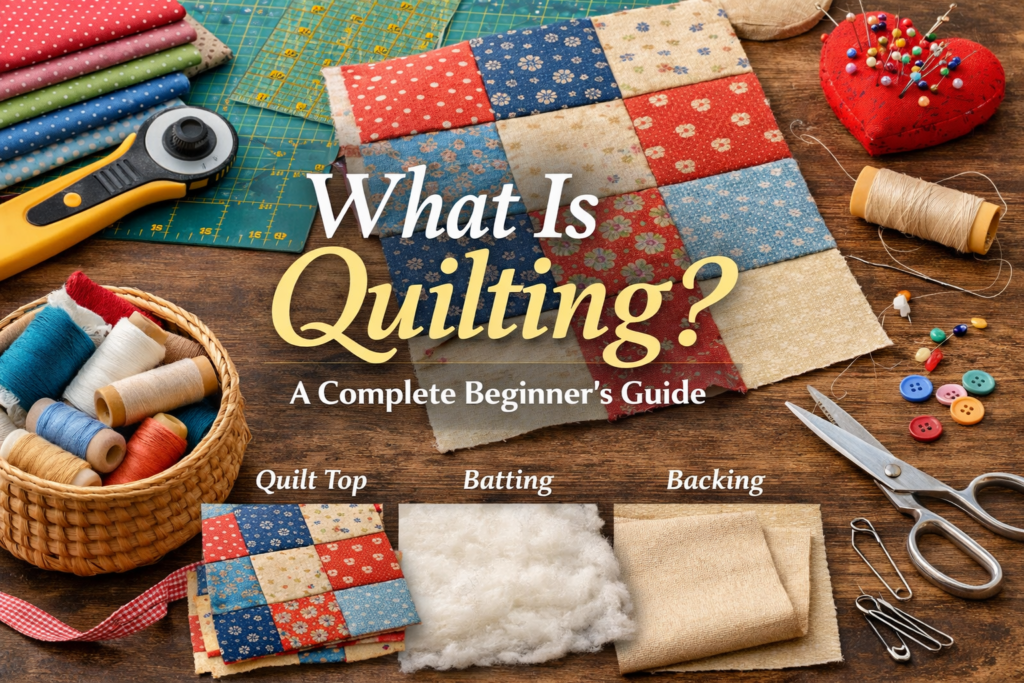
Quilting is the process of sewing together three layers:
- Top layer (patchwork or fabric design)
- Middle layer (batting – soft insulation)
- Bottom layer (backing fabric)
These three layers are stitched together using specific patterns to create a quilt.
But quilting is not only about blankets. You can make:
- Bed quilts
- Baby quilts
- Wall art
- Table runners
- Bags
- Decorative pieces
Essential Tools for Beginners (What You Actually Need)
Many beginners think quilting requires expensive equipment. That’s not true.
Here’s what you actually need to start:
1. Sewing Machine
You can start with a basic machine. It does not need to be advanced.
2. Rotary Cutter
This allows precise fabric cuts.
3. Cutting Mat
Protects your surface and improves accuracy.
4. Quilting Ruler
Helps cut straight lines and angles.
5. Fabric (100% Cotton Recommended)
Cotton is easier to sew and more stable.
6. Batting
This is the inner soft layer.
7. Thread
Polyester or cotton thread works well for beginners.
You do NOT need:
- Longarm machines
- Expensive specialty tools
- Professional studio setup
Step-by-Step: How to Make Your First Simple Quilt
Let’s break it down into clear stages.
Step 1: Choose a Simple Pattern
Start with a basic square patchwork.
Avoid:
- Complex geometric patterns
- Curved designs
- Advanced blocks
Simple square quilts are easier and build confidence.
Step 2: Cut Your Fabric
Cut equal squares (for example: 5×5 inches).
Precision matters.
Uneven cuts lead to alignment problems later.
Step 3: Sew the Squares Together
Sew squares into rows first.
Then sew the rows together.
Use consistent seam allowance (¼ inch is standard).
Step 4: Create the Quilt Sandwich
Layer in this order:
Bottom (right side down)
Batting
Top (right side up)
Pin everything carefully.
Step 5: Quilting (The Stitching Part)
This is where many beginners get nervous.
You stitch through all three layers.
For beginners:
- Stitch straight lines
- Follow seam lines
- Keep it simple
Step 6: Binding the Edges
Binding finishes the edges and makes the quilt durable.
This step makes your quilt look professional.
Common Beginner Mistakes (And How to Avoid Them)
1. Fabric Not Pre-Washed
Some fabrics shrink.
2. Inconsistent Seam Allowance
This causes misalignment.
3. Pulling Fabric While Sewing
Let the machine feed the fabric naturally.
4. Starting With a Huge Quilt
Start small — baby quilt or lap quilt size.
How Much Does It Cost to Start Quilting?
Basic starter cost estimate:
- Sewing machine (basic): $100–$200
- Cutting tools: $40–$60
- Fabric for small quilt: $30–$50
You can realistically start for under $300 total.
After that, quilting becomes very affordable.
How Long Does It Take to Make a Quilt?
Beginner quilt:
- Cutting: 1–2 hours
- Sewing top: 2–3 hours
- Quilting layers: 2–4 hours
- Binding: 1–2 hours
Total: 6–12 hours depending on pace.
Is Quilting Hard?
No.
Quilting requires patience more than skill.
Most beginners improve dramatically after their first project.
Hand Quilting vs Machine Quilting
Hand Quilting
- Slower
- More traditional
- More artistic
Machine Quilting
- Faster
- More precise
- Beginner-friendly
For beginners: start with machine quilting.
Best Fabrics for Beginners
Use:
- 100% cotton quilting fabric
- Avoid stretchy fabrics
- Avoid silk or slippery material
Cotton is stable and forgiving.
How to Choose Your First Quilt Design
Choose based on:
- Skill level
- Time available
- Fabric availability
- Final purpose (gift, decoration, sale)
Start small and scale later.
Can You Make Money With Quilting?
Yes, through:
- Selling finished quilts
- Selling patterns
- Custom orders
- Etsy store
- Craft fairs
But first focus on skill.
Why Quilting Is Good for Mental Health
Studies show repetitive crafts:
- Reduce anxiety
- Improve focus
- Increase mindfulness
- Boost creativity
Quilting is both artistic and therapeutic.
Final Thoughts: Your First Quilt Is Just the Beginning
Quilting may look complex, but it becomes intuitive quickly.
The key is:
Start simple.
Focus on accuracy.
Practice consistency.
Finish your first project.
Once you complete one quilt, confidence builds fast.
And from there, you’re no longer asking “What is quilting?”
You’re asking “What should I quilt next?”