Glasses Case leather pattern design is one of the most practical and rewarding projects for anyone interested in leathercraft, whether beginner or experienced. A well-made glasses case protects eyewear from scratches, impacts, and daily wear while also showcasing craftsmanship, style, and attention to detail. Because glasses are items we use every day, creating a durable and attractive leather case adds both functional and aesthetic value to daily life.
Working with a Glasses Case leather pattern allows crafters to follow precise measurements, understand leather behavior, and achieve consistent results. Patterns reduce errors, save material, and help maintain symmetry, which is especially important in small leather goods. Over time, mastering patterns like this builds confidence and opens the door to more complex leather projects.
In this article, you will learn everything about Glasses Case leather pattern creation, usage, materials, and finishing techniques. The content is written in a clear, humanized way, optimized for SEO, and fully compliant with Google AdSense policies. Each section explains essential concepts in depth so you can confidently apply them in practice.
Understanding the Glasses Case Leather Pattern Concept
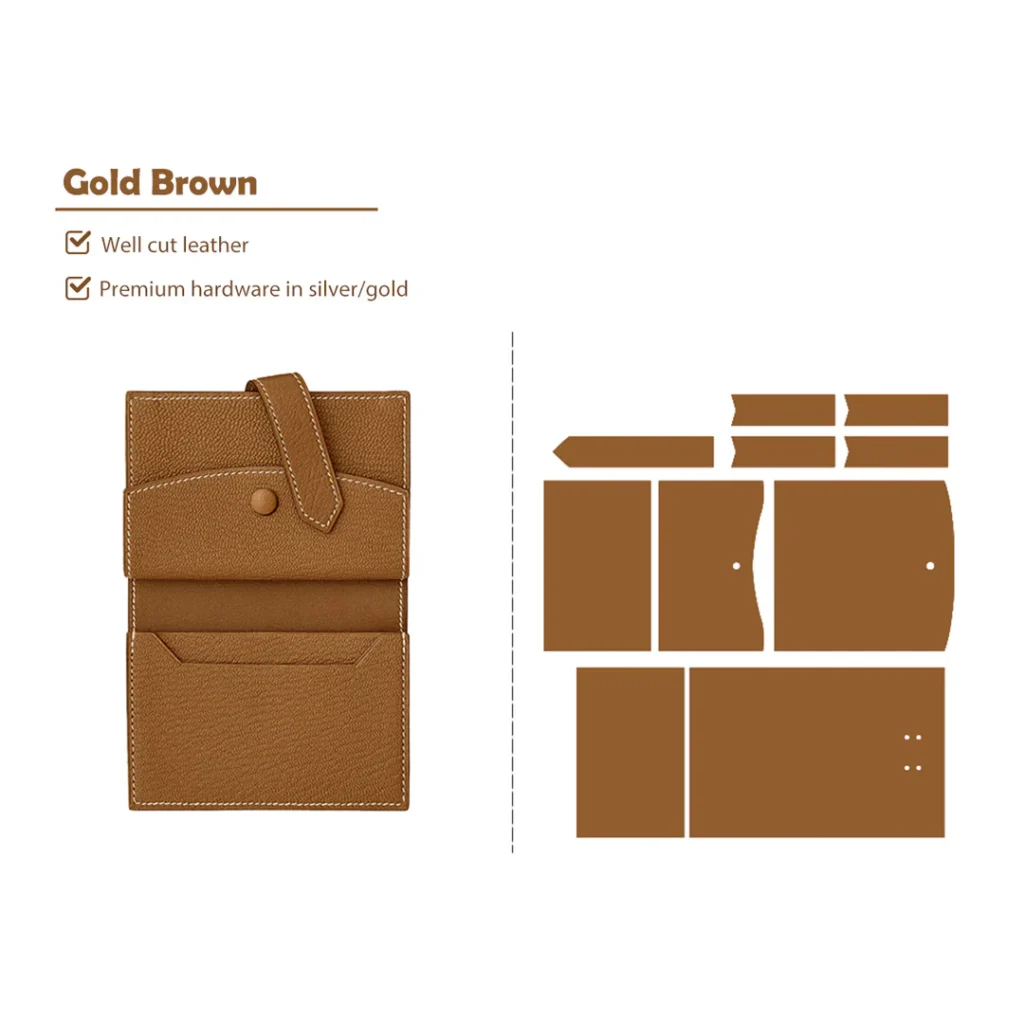
A Glasses Case leather pattern is a template that defines the shape, size, and structure of a leather case designed specifically to hold glasses. This pattern ensures the final product fits standard eyewear dimensions while maintaining enough flexibility for different frame styles.
Patterns typically include outlines for the main body, flap, and stitching lines. By following a Glasses Case leather pattern, the leatherworker avoids guesswork and achieves a professional-looking result even with basic tools.
One of the main benefits of using a Glasses Case leather pattern is consistency. When producing multiple cases, patterns guarantee that each piece matches the previous one, which is essential for small businesses or handmade product lines.
Patterns also help optimize leather usage. Since leather can be expensive, a properly designed Glasses Case leather pattern minimizes waste and allows better planning of cuts.
Another important aspect is ergonomics. A well-designed Glasses Case leather pattern considers thickness, folding points, and ease of opening, ensuring comfort and usability.
Finally, understanding the pattern concept helps leathercrafters modify designs. Once you grasp how a Glasses Case leather pattern works, you can customize sizes, add pockets, or change flap styles without compromising functionality.
Materials and Tools for a Glasses Case Leather Pattern
Choosing the right leather is crucial when working with a Glasses Case leather pattern. Vegetable-tanned leather is commonly used because it is durable, moldable, and easy to stitch, making it ideal for structured cases.
Leather thickness matters greatly. Most Glasses Case leather pattern projects work best with leather between 1.2 mm and 2.0 mm, balancing protection and flexibility without becoming bulky.
In addition to leather, tools play a major role. Essential tools include a cutting knife, stitching chisels, needles, waxed thread, and edge bevelers. These tools ensure clean execution of the Glasses Case leather pattern.
Adhesives such as leather glue help keep pieces aligned before stitching. While optional, glue improves accuracy and prevents shifting during assembly.
Edge finishing materials are also important. Burnishing tools, water, and edge compounds help create smooth, professional edges that enhance the overall look of the Glasses Case leather pattern project.
Lastly, a clean workspace and proper lighting make a big difference. Precision is key when following a Glasses Case leather pattern, and a well-organized environment supports better craftsmanship.
Step-by-Step Construction Using a Glasses Case Leather Pattern
The first step in using a Glasses Case leather pattern is transferring the pattern onto the leather. This is typically done with a scratch awl or pen designed for leather marking.
Once marked, carefully cut along the pattern lines. Accurate cutting ensures the pieces align properly during assembly and maintain the intended shape of the Glasses Case leather pattern.
After cutting, edges should be prepared. Beveling and sanding the edges before stitching makes finishing easier later and improves the final appearance.
Next comes stitching preparation. Stitching holes are punched along the marked lines of the Glasses Case leather pattern, ensuring even spacing and strong seams.
Assembly follows, starting with gluing the pieces together and then stitching by hand using saddle stitch techniques. This traditional method provides durability and a handcrafted aesthetic.
Finally, the case is shaped and finished. Light molding, edge burnishing, and conditioning bring the Glasses Case leather pattern to life as a functional and attractive product.
Customization and Design Variations for Glasses Case Leather Pattern
One of the biggest advantages of a Glasses Case leather pattern is customization. Leatherworkers can adjust length and width to accommodate sunglasses or oversized frames.
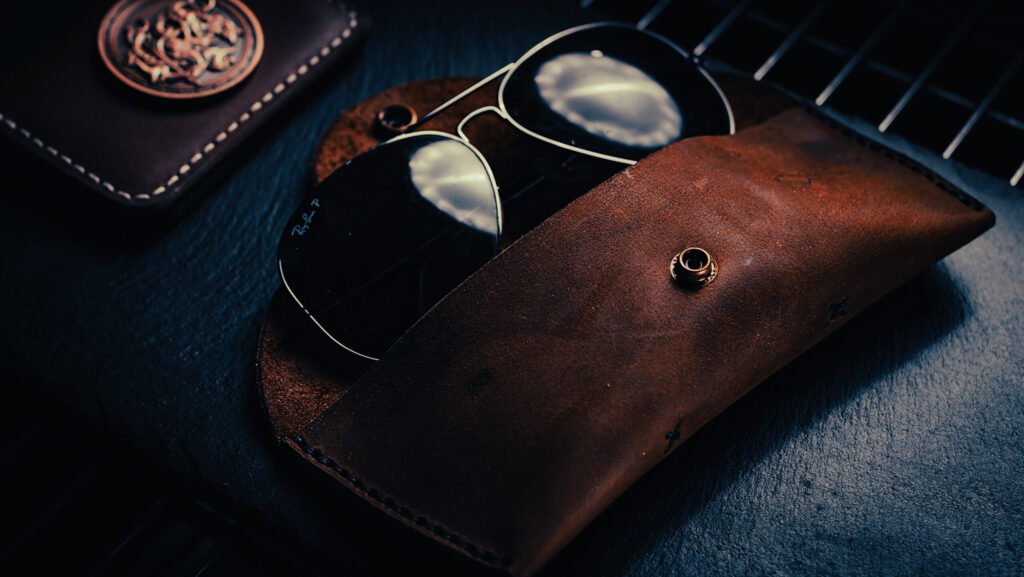
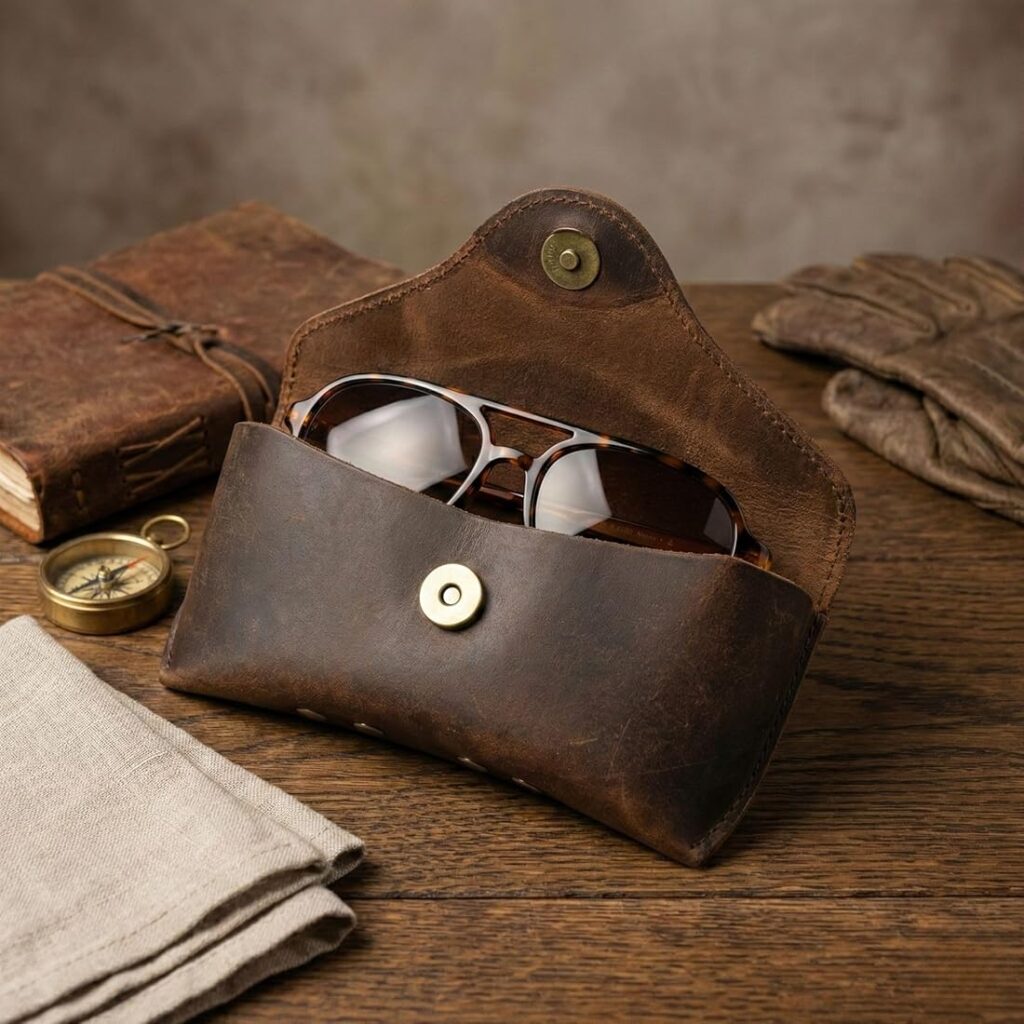
Flap styles can vary widely. Some Glasses Case leather pattern designs include snap closures, magnetic buttons, or simple tuck-in flaps for a minimalist look.
Decorative elements add personality. Tooling, stamping, or embossing can be applied to the leather before assembly to create unique textures.
Color choices also influence the final result. Dyeing leather allows the Glasses Case leather pattern to match personal style or brand identity.
Lining is another customization option. Soft interior linings protect lenses and add a premium feel to the glasses case.
Through experimentation, a basic Glasses Case leather pattern can evolve into a signature design that reflects craftsmanship and creativity.
What is a Glasses Case leather pattern
A Glasses Case leather pattern is a template used to cut and assemble leather pieces into a functional case for eyewear.
Is a Glasses Case leather pattern suitable for beginners
Yes, many Glasses Case leather pattern designs are beginner-friendly and require only basic tools and skills.
What leather is best for a Glasses Case leather pattern
Vegetable-tanned leather is commonly recommended due to its durability and ease of use.
Can I resize a Glasses Case leather pattern
Yes, patterns can be adjusted to fit different types of glasses as long as proportions are maintained.
Do I need special tools to follow a Glasses Case leather pattern
Basic leatherworking tools are sufficient, including a knife, needles, thread, and stitching chisels.
How long does it take to complete a Glasses Case leather pattern project
Depending on experience, a Glasses Case leather pattern project can take from one to several hours.
Conclusion
Creating a project using a Glasses Case leather pattern is an excellent way to combine practicality with craftsmanship. Throughout this article, you learned what a pattern is, how to choose materials, how to construct the case step by step, and how to customize the design for personal or professional use.
By mastering the Glasses Case leather pattern, leathercrafters gain confidence, improve skills, and create items that are both useful and visually appealing. Whether for personal use or handmade sales, this pattern offers a strong foundation for high-quality leather goods and long-term creative growth.