Strength, Durability, and How to Choose the Right Thread for Every Project
Introduction: Why Thread Choice Matters More Than You Think
Most beginners focus on fabric or leather quality.
But professionals know something different:
Thread determines durability.
Using the wrong thread can cause:
- Seams breaking under tension
- Visible fraying
- Uneven stitches
- Poor finish
- Reduced lifespan of the product
Whether you’re sewing leather bags, quilting, upholstery, garments, or crafts — choosing the correct thread is critical.
This guide will explain:
- Every major thread type
- Strength comparison
- When to use each material
- Professional recommendations
- Common mistakes to avoid
After reading this, you will never randomly choose thread again.
Understanding Thread Basics (Before Choosing)
Thread is defined by:
- Fiber material
- Weight (thickness)
- Strength
- Stretch
- Resistance to UV and moisture
- Intended application
Not all threads behave the same under tension, friction, or outdoor exposure.
Main Thread Types for Leather and Fabric
Let’s break them down properly.
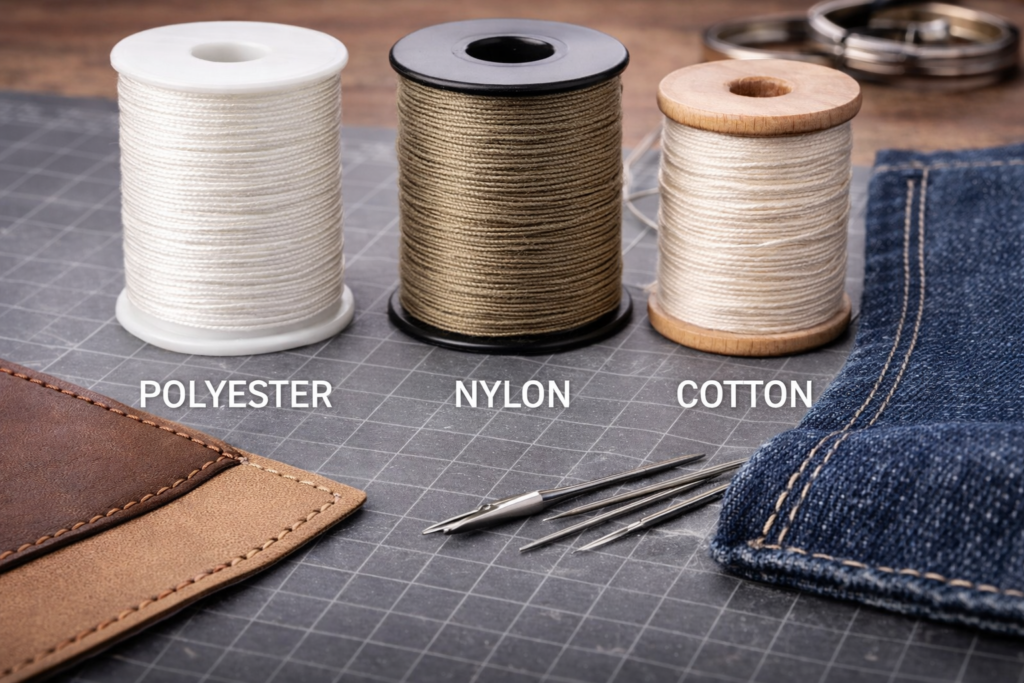
1. Polyester Thread
Best overall all-purpose thread.
Strength:
High tensile strength.
Stretch:
Moderate flexibility.
Resistance:
- Excellent UV resistance
- Resistant to mildew
- Good chemical resistance
Best For:
- Leather goods
- Outdoor upholstery
- Bags
- Quilting
- Garments
Polyester is extremely versatile and durable.
For leather sewing with a machine, bonded polyester thread is often the best choice.
2. Nylon Thread
Stronger than polyester in pure tensile strength.
Strength:
Very high.
Stretch:
More elastic than polyester.
Resistance:
- Good abrasion resistance
- Poor UV resistance (weakens in sunlight over time)
Best For:
- Indoor leather goods
- Footwear
- Heavy-duty stitching
If your product stays indoors, nylon is excellent.
For outdoor use, polyester is superior.
3. Cotton Thread
Traditional but less durable.
Strength:
Moderate to low.
Stretch:
Minimal stretch.
Resistance:
- Not moisture resistant
- Weak against heavy tension
Best For:
- Quilting
- Decorative stitching
- Vintage or heritage projects
Cotton thread gives a beautiful matte finish but is not ideal for heavy leather.
4. Linen Thread
Traditional choice for hand leather stitching.
Strength:
Strong for hand stitching.
Stretch:
Low.
Resistance:
Needs waxing for protection.
Best For:
- Hand-stitched leather
- Saddlery
- Traditional craftsmanship
Waxed linen thread is still preferred by many artisan leatherworkers.
5. Bonded Thread (Bonded Nylon or Polyester)
Bonded thread is treated with a special coating.
Advantages:
- Reduced friction
- Smoother sewing
- Stronger seam integrity
This is professional-grade thread for leather machines.
Thread Weight Explained (Critical for Leather Projects)
Thread weight affects:
- Stitch appearance
- Strength
- Needle size required
Lower number = thicker thread.
Example:
- Tex 40 → light
- Tex 70 → medium
- Tex 135 → heavy-duty leather
Using thread too thick for your needle causes breakage.
Using thread too thin weakens seams.
Leather vs Fabric: What Changes?
Leather requires:
- Stronger thread
- Higher abrasion resistance
- Thicker gauge
Fabric sewing allows more flexibility.
Quilting thread is usually lighter.
Leather thread must withstand tension and friction.
How to Choose Thread for Leather Projects
Ask these questions:
- Is it indoor or outdoor use?
- Will the item carry weight?
- Is it decorative or structural stitching?
- Machine or hand stitching?
Recommended:
- Outdoor leather → Bonded polyester
- Heavy bags → Bonded nylon or polyester
- Hand saddle stitch → Waxed linen
How to Choose Thread for Fabric Projects
Consider:
- Fabric weight
- Stretch factor
- Wash frequency
Recommended:
- Quilting → Cotton or polyester
- Stretch garments → Polyester
- Upholstery → Heavy polyester
Common Mistakes When Choosing Thread
1. Matching thread to fabric color only
Strength matters more than color.
2. Using cotton for leather bags
Cotton cannot handle tension long term.
3. Ignoring UV exposure
Outdoor leather with nylon thread will weaken over time.
4. Wrong needle size
Thread must match needle.
Thread Strength Comparison (Simple Overview)
Strongest to weakest (general order):
- Bonded Nylon
- Bonded Polyester
- Nylon
- Polyester
- Linen
- Cotton
However, UV resistance shifts this ranking.
Professional Tip: When to Upgrade Thread
Upgrade thread if:
- You sell your products
- You work with thick leather
- You make bags, belts, or straps
- You need durability guarantees
Cheap thread destroys professional work.
Does Thread Affect Machine Performance?
Yes.
Low-quality thread causes:
- Thread breakage
- Lint buildup
- Tension issues
- Uneven stitches
Professional thread improves machine efficiency.
Can You Use the Same Thread for Everything?
Technically yes.
Professionally? No.
Using all-purpose polyester works for many projects, but specialized thread improves quality dramatically.
Final Thoughts: Thread Is the Backbone of Your Project
Thread is invisible until it fails.
Choosing the right thread:
- Improves durability
- Enhances appearance
- Prevents seam damage
- Elevates your craftsmanship
If you want professional-level results, thread choice is not optional — it is strategic.