Strength Ratings, Durability Factors, and How to Choose the Right Hook-and-Loop Fastener
Introduction: Velcro Is Not All the Same
Many people think Velcro is just a simple fastening strip.
But professionals in:
- Upholstery
- Leather crafting
- Outdoor gear
- Industrial design
- Clothing manufacturing
know that choosing the wrong type of Velcro can lead to product failure.
Not all hook-and-loop fasteners have the same:
- Holding strength
- Durability
- Weather resistance
- Adhesive power
- Flexibility
In this complete guide, you will learn:
- Every major Velcro type
- Strength differences
- Industrial vs craft use
- Indoor vs outdoor durability
- Adhesive vs sew-on comparison
- Professional recommendations
After this, you will never buy Velcro blindly again.
What Is Velcro? (Technical Explanation)
Velcro Companies created the original hook-and-loop fastening system.
The system works through:
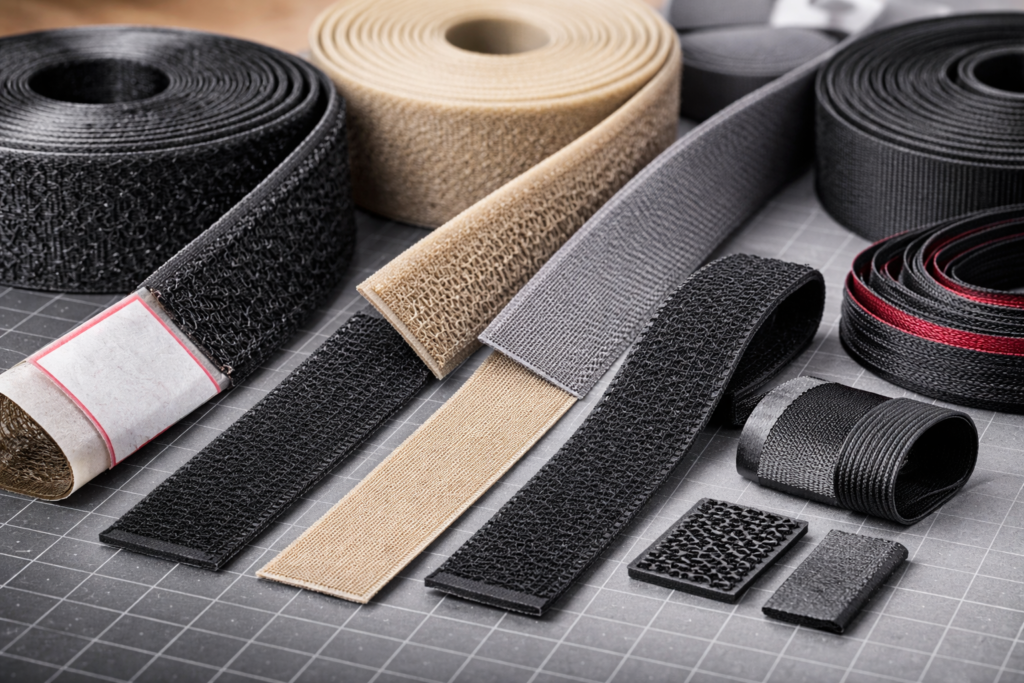
- A hook side (tiny stiff hooks)
- A loop side (soft fabric loops)
When pressed together, the hooks catch the loops, creating temporary fastening.
But modern hook-and-loop systems vary widely in construction and strength.
Main Types of Velcro
Let’s break them down clearly.
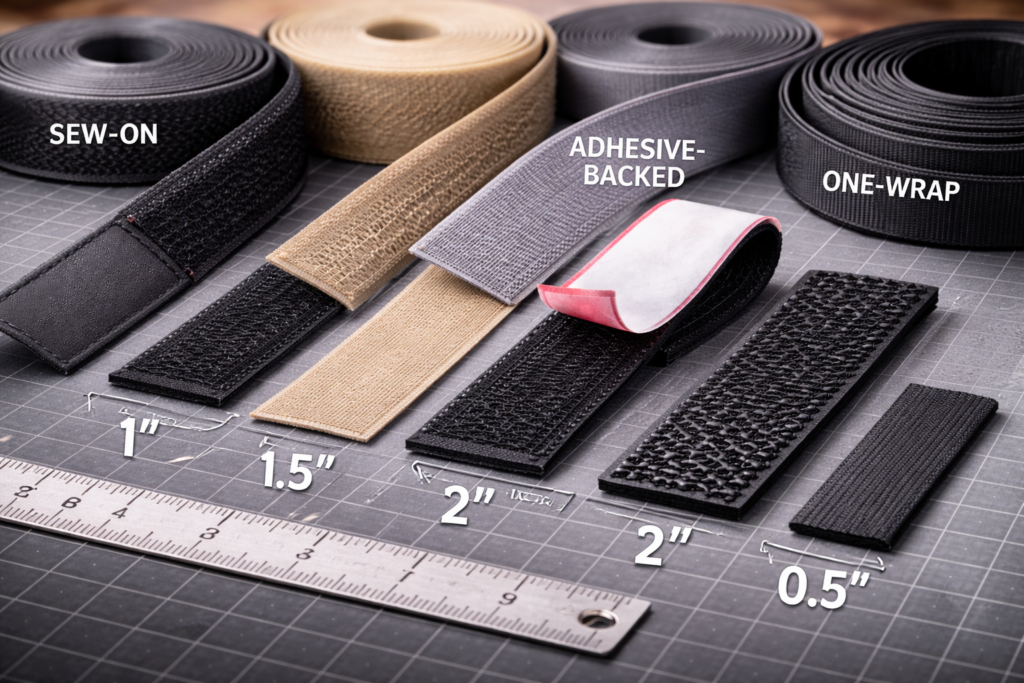
1. Sew-On Velcro
Description:
Standard non-adhesive Velcro designed to be stitched into fabric or leather.
Strength:
Moderate to high (depends on width and density).
Best For:
- Garments
- Bags
- Upholstery
- Quilts
- Fabric crafts
Advantages:
- Very durable
- Machine washable
- Flexible
Disadvantages:
- Requires sewing
- Not ideal for rigid surfaces
Sew-on Velcro is the most reliable option for long-term projects.
2. Adhesive-Backed Velcro
Description:
Comes with pre-applied glue backing.
Strength:
Moderate surface hold, weaker under tension.
Best For:
- Wall mounting
- Lightweight decorations
- Temporary fastening
Advantages:
- No sewing required
- Easy to apply
Disadvantages:
- Adhesive weakens over time
- Not ideal for fabric under tension
- Fails in high heat or moisture
Important: Adhesive Velcro is often overused in sewing projects — and fails.
3. Heavy-Duty Velcro
Designed for industrial or high-load applications.
Strength:
High to very high.
Best For:
- Tool organization
- Automotive use
- Outdoor equipment
- Tactical gear
Heavy-duty Velcro usually has:
- Stronger hook density
- Reinforced backing
- Industrial adhesive
4. Industrial-Strength Velcro
Professional-grade hook-and-loop fasteners.
Strength:
Extremely high shear resistance.
Applications:
- Aerospace
- Automotive interiors
- Military equipment
- Marine environments
Often features:
- Weatherproof adhesive
- UV resistance
- Temperature tolerance
5. Waterproof Velcro
Designed for:
- Marine use
- Outdoor gear
- High-humidity environments
Resists:
- Mold
- UV damage
- Salt exposure
Ideal for outdoor leather or fabric products.
Strength Differences Explained
Velcro strength is measured in:
- Shear strength (sideways force)
- Peel strength (pulling apart force)
Heavy-duty Velcro has:
- Higher shear resistance
- Stronger peel force
- Denser hook structure
Wider strips increase total holding power.
Adhesive vs Sew-On: Which Is Stronger?
Short answer: Sew-on is stronger long term.
Adhesive fails when:
- Exposed to heat
- Exposed to moisture
- Applied to textured surfaces
- Under constant tension
Sew-on distributes force through stitching.
For leather bags, upholstery, or garments — always choose sew-on.
Velcro for Leather Projects
Leather requires:
- Strong stitch hold
- Durable hook density
- Resistance to friction
Best choice:
Heavy-duty sew-on Velcro.
Avoid:
Cheap adhesive Velcro on leather surfaces.
Velcro for Quilting and Fabric Projects
For quilting:
- Lightweight sew-on Velcro works best
- Soft hook version prevents fabric damage
For clothing:
- Low-profile Velcro for comfort
- Rounded corners to avoid scratching skin
Common Velcro Mistakes
1. Using adhesive on fabric
Adhesive fails after washing.
2. Choosing narrow strips for heavy load
Width increases strength.
3. Ignoring surface preparation
Dust or oil reduces adhesive performance.
4. Overloading lightweight Velcro
Match strength to purpose.
How to Increase Velcro Durability
- Sew around entire perimeter
- Reinforce corners
- Avoid repeated peeling in same direction
- Clean hooks regularly
- Avoid heat exposure for adhesive types
How Long Does Velcro Last?
Depends on:
- Frequency of use
- Load tension
- Exposure to sunlight
- Moisture
High-quality sew-on Velcro can last years.
Industrial-grade can last over a decade in controlled environments.
Professional Recommendations by Application
Bags & Leather Accessories
Heavy-duty sew-on Velcro.
Quilting Projects
Soft, lightweight sew-on.
Wall Mounting
Industrial adhesive-backed Velcro.
Outdoor Gear
Waterproof or UV-resistant heavy-duty.
When Should You Upgrade to Industrial Velcro?
Upgrade if:
- You sell products professionally
- The item carries weight
- It will be exposed to outdoor elements
- You need long-term durability
Cheap Velcro damages reputation.
Final Thoughts: Velcro Is a Structural Component
Velcro is not just a fastening accessory.
It is:
- A structural decision
- A durability factor
- A product quality determinant
Choosing the right type improves:
- Customer satisfaction
- Product lifespan
- Professional appearance
- Structural reliability
Understanding Velcro types separates hobby projects from professional craftsmanship.