Crochet is more than just a craft — it’s a relaxing, creative skill that allows you to turn simple yarn into beautiful, useful items. Whether you want to make cozy blankets, stylish scarves, or adorable amigurumi toys, learning crochet opens the door to endless possibilities.
If you’ve never held a crochet hook before, don’t worry. This guide will walk you through everything you need to know to confidently start your crochet journey.
What Is Crochet?
Crochet is a needlework technique that uses a hooked tool (called a crochet hook) to create fabric from yarn. Unlike knitting, which uses two needles, crochet uses only one hook to create loops and stitches.
Because of this structure, crochet projects tend to be:
- Easier to fix if you make a mistake
- Faster to complete
- Highly versatile in design
It’s one of the most beginner-friendly fiber arts available.
Essential Crochet Tools for Beginners
Before you start, you need a few basic supplies.
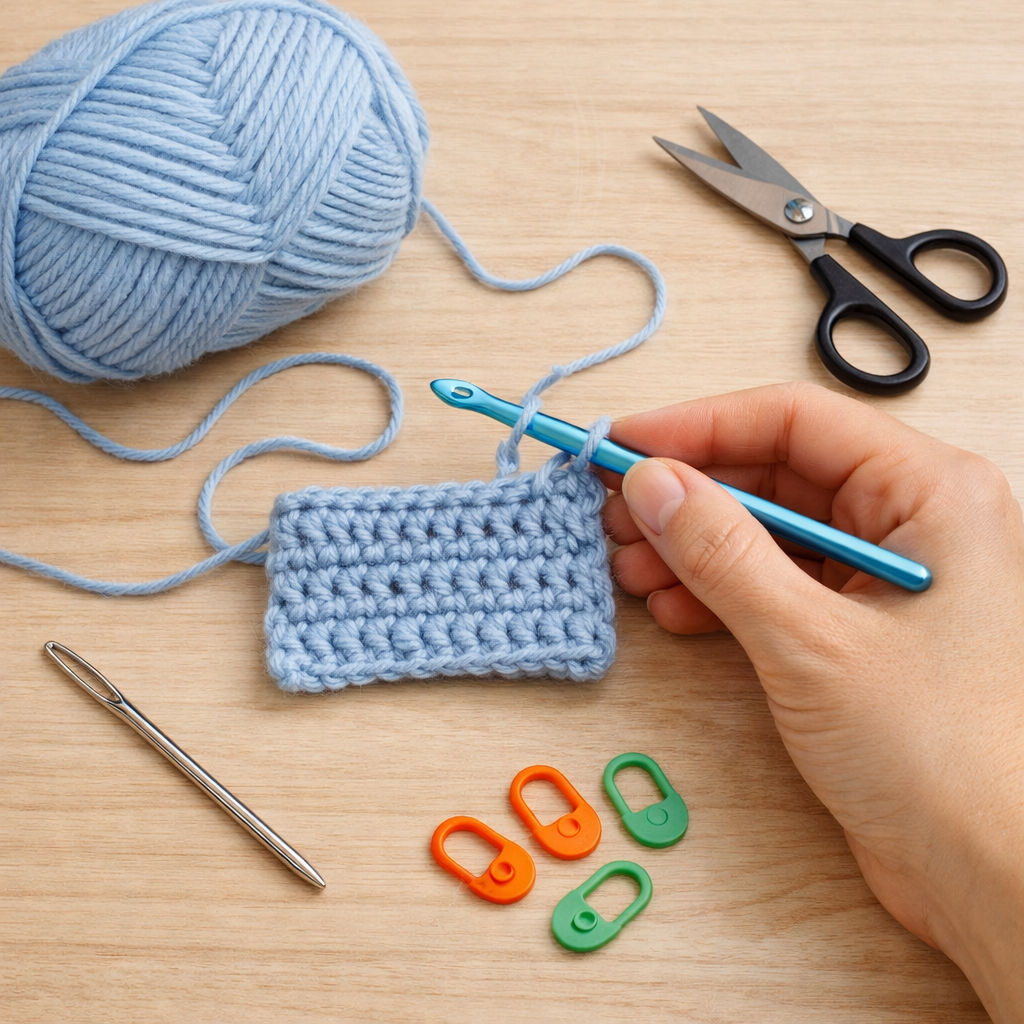
1. Crochet Hook
For beginners, the best size to start with is:
- 5mm (H-8) hook
It’s comfortable to hold and works well with medium-weight yarn.
2. Yarn
Choose:
- Medium weight yarn (also labeled as “Worsted Weight” or Category 4)
Avoid very thin or fuzzy yarn in the beginning — it makes learning harder.
3. Scissors
Small, sharp scissors help cut yarn cleanly.
4. Yarn Needle
Used for weaving in loose ends when finishing projects.
5. Stitch Markers (Optional)
Helpful for tracking stitches in larger projects.
Understanding Basic Crochet Stitches
All crochet projects are built from a few foundational stitches.
Chain Stitch (ch)
The chain stitch is the starting point of almost every project. It creates the base row.
Single Crochet (sc)
One of the simplest and most commonly used stitches. It creates a tight, sturdy fabric.
Double Crochet (dc)
Taller than single crochet and works up faster.
Slip Stitch (sl st)
Used to join rounds or finish edges.
Mastering these four stitches will allow you to complete most beginner projects.
How to Hold the Hook and Yarn
There are two common ways to hold a crochet hook:
- Pencil Grip (like holding a pencil)
- Knife Grip (like holding a knife)
Both are correct — choose what feels natural.
For yarn tension:
- Wrap yarn around your fingers to control flow.
- Keep tension consistent but relaxed.
Tension is one of the biggest challenges for beginners. It improves with practice.
Step-by-Step: Your First Crochet Practice Swatch
Follow this simple exercise:
- Make a slip knot.
- Chain 15 stitches.
- Insert hook into the second chain from hook.
- Make 1 single crochet.
- Continue single crochet across the row.
- Chain 1, turn your work.
- Repeat single crochet across.
Practice this for several rows to understand stitch formation.
This small rectangle is called a swatch — and it’s your first real crochet piece.
Common Beginner Mistakes (And How to Avoid Them)
Tight Stitches
If your hook struggles to move through loops, loosen your tension.
Uneven Edges
Count your stitches at the end of every row.
Using the Wrong Yarn
Stick to medium-weight yarn until confident.
Skipping Foundation Chains
Always insert your hook into the correct chain — beginners often skip one accidentally.
Mistakes are part of learning. Every crocheter started exactly where you are.
How to Read Basic Crochet Patterns
Patterns use abbreviations like:
- ch = chain
- sc = single crochet
- dc = double crochet
- sl st = slip stitch
A simple pattern example:
Row 1: Ch 15
Row 2: Sc in each stitch across
Patterns may look intimidating at first, but once you understand abbreviations, they become much easier.
Easy First Projects for Beginners
After practicing basic stitches, try:
- Simple Scarf
- Dishcloth
- Basic Headband
- Small Baby Blanket
- Granny Square
These projects help build muscle memory and confidence.
How Long Does It Take to Learn Crochet?
Most beginners can:
- Understand basic stitches in 1–3 days
- Complete a simple project within a week
Mastery takes time, but progress is fast if you practice 20–30 minutes daily.
Consistency beats perfection.
Benefits of Learning Crochet
Crochet is not only creative — it also offers:
- Stress reduction
- Improved focus
- Increased patience
- Creative satisfaction
- Potential income opportunities
Many people turn crochet into side businesses selling handmade items online.
Is crochet hard for beginners?
No. It may feel awkward at first, but it becomes easier quickly with practice.
What is the easiest stitch to learn?
Single crochet is typically the easiest beginner stitch.
Do I need expensive tools?
No. Basic hooks and yarn are affordable and widely available.
Is crochet faster than knitting?
For many projects, yes. Crochet often works up faster.
Can I learn crochet without someone teaching me?
Yes. With practice and detailed guides like this, self-learning is completely possible.
Starting crochet may feel overwhelming at first, but every expert once struggled with their first chain stitch. The key is patience and consistency.
Focus on learning one stitch at a time. Practice regularly. Don’t rush the process.
With just a hook and yarn, you can create something truly meaningful — and that’s the beauty of crochet.